Local Service PPC Advertising Guide
By Best Fit Digital Editorial Team · Updated 2026-07-14
PPC advertising for local service businesses requires targeting geographic keywords, setting location-based bid adjustments. Optimizing Google Ads campaigns around high-intent search terms like "plumber near me" or "emergency HVAC repair." Google's Local Services Ads deliver verified leads directly. A modest monthly budget produces measurable results for most small service providers.
Local Services Ads (LSAs) give service businesses a pay-per-lead model that eliminates wasted spend on unqualified clicks. Google Guarantee and Google Screened badges build customer trust through verification. Prioritizing positive reviews, fast lead response, and an updated Google Business Profile directly improves your ad ranking and conversion rates.
PPC advertising gives local service businesses immediate visibility at the moment prospective customers search for relevant services. Platforms like Google Local Services Ads operate on a pay-per-lead model, connecting businesses with nearby buyers. Earning a Google Guarantee badge through verification strengthens customer trust and improves conversion rates significantly.
Key Takeaways
- Local Services Ads operate on a pay-per-lead model, reducing wasted spend on unqualified clicks.
- Google Guarantee, Google Screened, and License Verified badges build trust with local customers.
- PPC advertising places your business in front of buyers at the exact moment they search.
- Tracking cost-per-lead alongside click costs reveals the 11 key metrics that drive real revenue.
What Do You Need Before Running Local PPC?
Local service businesses require three foundational elements before launching any PPC campaign: clear goals, defined budget parameters. A precise audience profile. Skipping this groundwork wastes ad spend on impressions that never convert into booked jobs.
What Goals and Budget Should a Local Business Set Before Advertising?
Establishing measurable goals is the first step. Businesses that define what success looks like — whether that means more service calls, form submissions. Booked appointments — give every campaign dollar a clear purpose. Targeting the right audience from the start corrects slow sales faster than any mid-campaign adjustment. Best Fit Digital structures every campaign around the specific goals, budget parameters. audience definition of each client, treating measurable results as the north star rather than an afterthought.
Does a Google Business Profile Affect Local PPC Performance?
A verified and fully updated Google Business Profile is a non-negotiable prerequisite. Proximity signals, accumulated positive reviews, and responsiveness to leads all influence how local ads perform in search results. An incomplete or outdated profile undermines even a well-funded campaign.
Before launching, local businesses should complete the following steps:
- Define campaign goals — specify the exact conversion action the campaign must drive.
- Set a realistic budget — allocate spend that sustains consistent visibility without exhausting resources prematurely.
- Identify the target audience — narrow geography, service type, and customer intent.
- Verify and update the Google Business Profile — confirm all business information is accurate and current.
How Do You Build a High-Converting Local PPC Campaign?
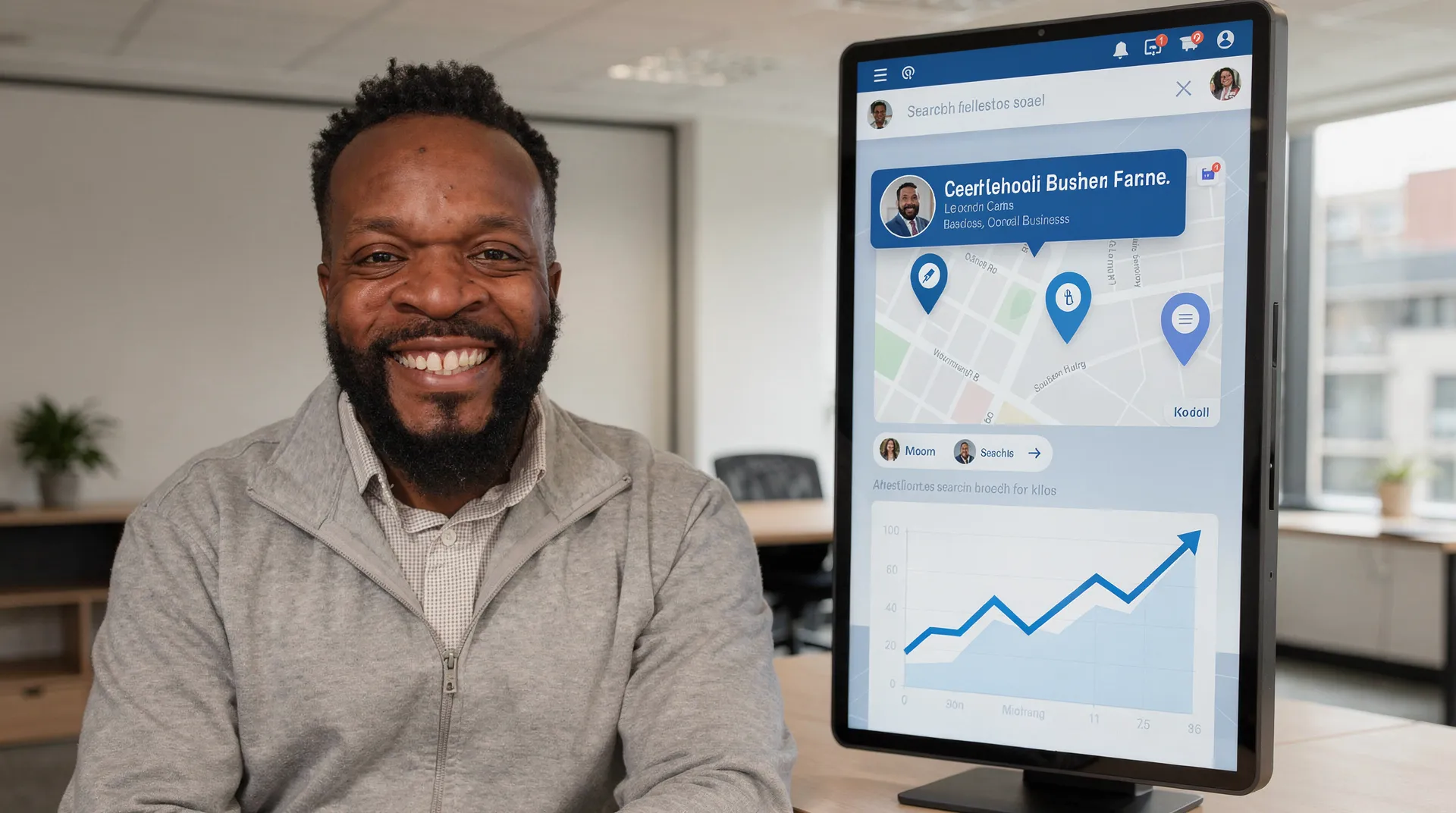
A high-converting local PPC campaign places a business at the top of search results at the precise moment a nearby shopper is ready to act. Without disciplined geographic targeting and continuous refinement, even well-funded campaigns bleed budget on impressions that never convert into leads.
What Prerequisites Should Businesses Address Before Launching Local PPC?
Before launching, businesses must define their service area with precision. Align ad copy to the specific intent of local searchers. Campaigns built on vague geographic parameters attract irrelevant clicks. And irrelevant clicks drain budgets without producing bookings, calls, or form submissions.
Follow these steps to build a campaign structured for measurable results:
- Define the geographic target zone. Map the exact service radius — city, zip code, or radius around a physical location — and exclude areas outside that boundary from day one.
- Conduct local keyword research. Identify search terms that combine service intent with location modifiers, prioritizing phrases that signal purchase readiness over general curiosity.
- Segment campaigns by service type. Group related keywords into tightly themed ad groups so ad copy matches search intent as closely as possible.
- Write location-specific ad copy. Reference the target city or neighborhood directly in headlines and descriptions to increase relevance scores and click-through rates.
- Set a realistic budget with conversion tracking enabled. Without conversion tracking, there is no way to distinguish profitable clicks from wasted spend.
- Review impression data regularly. Many successful campaigns waste significant budget on impressions that never reach an engaged audience — auditing placement reports prevents that loss from compounding.
Which Industries Benefit Most from Local PPC?
Local PPC delivers strong returns across a wide range of service-based industries. Best Fit Digital works with HVAC contractors, law firms, healthcare providers, real estate agents. e-commerce brands across Baltimore and the surrounding region. Each industry requires a tailored targeting strategy. Search behavior and conversion paths differ significantly from one vertical to the next.

How Should You Use Local Services Ads Effectively?
Local Services Ads work best when businesses treat the platform as a precision lead-generation tool, not a broad awareness channel. The pay-per-lead model means advertisers pay only for verified customer contacts. Not raw clicks — so every dollar spent connects directly to a real prospect.
What Makes Local Services Ads Different From Standard PPC?
Standard pay-per-click campaigns charge for every click, regardless of intent. Local Services Ads (LSAs) operate on a pay-per-lead (PPL) model, billing businesses only when a potential customer makes direct contact. That structural difference protects advertising budgets from wasted spend on unqualified traffic.
How Do Verification Badges Affect Performance?
Google's verification process allows eligible businesses to earn one of three trust signals: the Google Guarantee badge, the Google Screened badge. The License Verified badge. Each badge signals credibility to prospective customers before a single conversation takes place. Businesses that complete verification earn stronger customer confidence — and stronger conversion rates follow.
To run LSAs effectively, businesses should follow these steps in order:
- Complete Google's verification process to qualify for the appropriate trust badge before launching any campaign.
- Optimize the Google Business Profile with accurate service categories, service areas, and business hours — LSA placement draws on this data directly.
- Set a budget aligned with lead volume goals, recognizing that LSAs provide prime placement in Google Search results for local customers.
- Monitor the lead dashboard daily, since leads arrive as phone calls and messages that require prompt responses to convert.
- Track and manage all incoming leads through the online dashboard, using booking data to identify which services generate the highest-quality contacts.
- Respond to leads quickly, as response time influences ranking within the LSA unit.
Consistent execution across all six steps transforms Local Services Ads from a passive listing into a reliable, measurable lead pipeline.
How Do You Optimize Campaigns for Maximum ROI?
Optimizing local advertising campaigns for maximum ROI requires a disciplined focus on conversion quality, not raw impression volume. Businesses that chase clicks without addressing the underlying ranking signals and campaign structure consistently waste budget without generating meaningful leads.
What Ranking Factors Directly Affect Local Services Ad Performance?
Proximity to customers, positive reviews, and quick responsiveness to leads are the three ranking signals that most directly influence Local Services Ad placement. Keeping a Google Business Profile current and setting an adequate budget reinforce those signals further. Businesses that neglect response time or allow reviews to stagnate lose ground to competitors who treat these factors as operational priorities — not afterthoughts.
How Does Scaling a Local PPC Campaign Differ From Simply Increasing Spend?
Scaling a local PPC campaign is not a matter of raising the budget and waiting. The real work involves identifying specific growth areas that generate more conversions for every dollar spent. Many campaigns accumulate thousands of impressions weekly while delivering minimal bookings — a clear sign that spend is outpacing strategy. Sustainable scaling demands a granular review of which keywords, ad groups. Audience segments actually drive booked jobs, then reallocating budget toward those proven performers.
A structured optimization process follows this sequence:
- Audit current conversion data — identify which campaigns produce leads versus which produce clicks only.
- Refine geographic targeting — concentrate spend in the service areas with the highest close rates.
- Improve review velocity — actively request reviews from satisfied customers to strengthen LSA ranking signals.
- Tighten response protocols — establish a defined lead-response window to meet platform responsiveness requirements.
- Reallocate budget — shift spend toward the ad types and platforms delivering the strongest cost-per-lead.
Best Fit Digital specializes in Google Ads and Meta Ads for small. Mid-sized businesses, applying a transparency-first, performance-driven model where every campaign decision connects directly to measurable outcomes. Each optimization step is tied to data, not assumptions.
What Common PPC Mistakes Should Local Businesses Avoid?
Unoptimized PPC campaigns drain advertising budgets without producing bookings or qualified leads. Local businesses pay for every click regardless of whether that click converts. Meaning poor campaign structure turns ad spend into pure loss.
Why Does Poor Optimization Waste PPC Budget?
Budget depletion without results is the most damaging mistake local advertisers make. When ads target the wrong audience, use weak landing pages, or lack negative keywords, every click costs money and delivers nothing. Businesses watch their budgets disappear without a single confirmed booking to show for it.
How Can Businesses Stay Agile When PPC Isn't Performing?
Rigid, long-term advertising contracts compound the problem. Best Fit Digital operates on month-to-month contracts with no long-term commitments. Businesses can adjust strategy the moment performance data signals a problem — rather than staying locked into a failing approach.
The most common PPC mistakes local businesses make include:
- Ignoring negative keywords, which allows irrelevant clicks to consume budget
- Skipping conversion tracking, making it impossible to measure true ROI
- Setting and forgetting campaigns instead of reviewing performance regularly
- Targeting too broad a geographic area, diluting spend across unqualified audiences
Strategic oversight matters. Best Fit Digital's leadership includes founder Clinton Jiggetts, a graduate of the Goldman Sachs 10,000 Small Businesses program. A selective initiative built around equipping business owners with the tools for disciplined, data-driven growth.
PPC advertising, when executed with precision. Strategic intent, transforms local service businesses from passive market participants into dominant forces within their target geographies. The principles covered here — from audience targeting and keyword selection to bid management and conversion tracking. Form the operational foundation of campaigns that deliver measurable, repeatable results. Businesses that commit to continuous optimization, disciplined budget allocation. Data-driven decision-making position themselves to outperform competitors and capture high-intent customers at every stage of the buying journey.
FAQ
What model do Local Services Ads use to charge businesses?
Local Services Ads operate on a pay-per-lead model, eliminating wasted spend on unqualified clicks. Connecting businesses directly with nearby buyers ready to act.
How does a Google Business Profile affect local PPC performance?
Proximity signals, positive reviews. Responsiveness to leads all influence how local ads rank in search results, making a verified. Fully updated profile a non-negotiable prerequisite.
What trust badges improve conversion rates for local service businesses?
Google Guarantee, Google Screened. License Verified badges build trust with local customers and improve conversion rates by demonstrating verification to prospective buyers.