Competitive Analysis in Digital Marketing

How to Run a Competitive Analysis for Digital Marketing — Practical Steps to Beat Your Competitors
Competitive analysis in digital marketing is a repeatable process for collecting competitor data and turning it into higher traffic, better conversions, and more qualified leads. This guide walks decision-makers through how competitive intelligence uncovers keyword gaps, channel signals, weak content, and paid-ad opportunities — and how to turn those signals into measurable growth. Too many teams waste budget because they don’t have a clear map of competitor strengths or conversion drivers. Focused competitor research removes that guesswork and speeds ROI. Below we define competitive analysis, share channel-specific methods (SEO, social, PPC, content), list useful tools, and give tactical steps you can start using right away.
What is Competitive Analysis in Digital Marketing and Why Does It Matter?
Competitive analysis is a structured look at rival brands’ online presence — their channels, offers, and messaging — to reveal opportunities and risks that affect traffic and conversions. It matters because it converts scattered market signals — search visibility, backlink authority, paid-ad placement, and social resonance — into prioritized actions that improve targeting and make budgets work harder. For small and mid-sized businesses, a clear competitive map surfaces low-cost channels and content topics competitors miss. It also lowers launch risk by validating messaging and pricing against real market behavior, so teams can iterate faster and sink fewer resources into losing plays.
Competitive analysis delivers tangible advantages through a few core mechanisms:
- Traffic Channel Mapping : See exactly which channels send competitors traffic and why.
- Keyword and Content Gap Detection : Spot the queries competitors rank for — and the topics they ignore.
- Offer and UX Comparison : Compare CTAs, pricing cues, and funnel friction that affect conversions.
Together, these mechanisms show where to attack, defend, or pivot to improve lead-generation performance.
How Does Competitive Analysis Identify Market Opportunities and Threats?
Competitive analysis maps competitor strengths by channel and highlights unmet demand where you can win. It also surfaces threats where rivals control intent or conversion paths. By studying search traffic, backlink profiles, and estimated paid spend, you can infer which keywords and pages drive traffic and which content formats convert. A short annotated SWOT clarifies whether a competitor’s deep content is a gap you should match or an opportunity to take a different angle. For example, if local competitors rank for “emergency HVAC repair [city]” but lack long-form content explaining costs, that’s an opening to capture conversions with targeted service pages.
What Are the Key Benefits of Competitive Analysis for Small to Medium-Sized Businesses?
Structured competitive analysis gives SMBs tactical wins that reduce cost-per-lead and shorten time-to-conversion. First, it improves targeting by revealing high-intent keywords and underserved local queries where you can get faster results. Second, it makes budgeting smarter: move paid spend to keywords and audiences competitors respond to, and stop wasting money on low-return experiments. Third, local SEO and differentiated offers let smaller players outcompete larger brands by being more relevant in the service area and on landing pages. Those wins add up into predictable reporting and measurable KPIs teams can track.
Research shows digital strategies — and social channels in particular — are powerful ways for smaller businesses to gain competitive advantage even with limited resources.
Digital Marketing Strategies for Competitive Advantage
In today’s tech-driven landscape, digital marketing creates affordable solutions for businesses that face budget and promotion constraints. Social platforms like Twitter, Instagram, websites, and Facebook help brands build awareness, loyalty, sales, and engagement. This study examines how lower-middle businesses that moved online used digital marketing strategies and what competitive advantages they gained.
Implications of digital marketing strategy: the competitive advantages of small businesses in Indonesia, 2022
How to Conduct Effective SEO Competitor Analysis for Digital Marketing Success
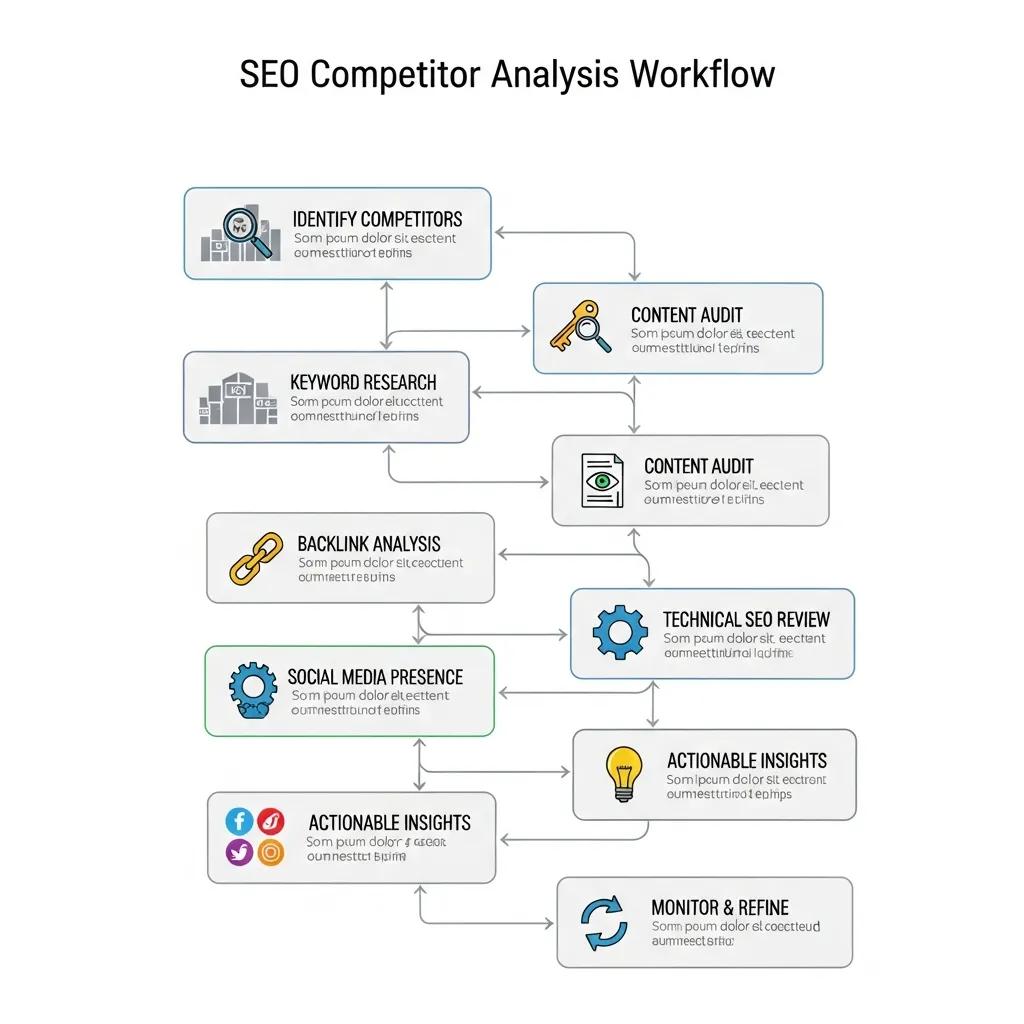
SEO competitor analysis is a step-by-step process to identify direct and indirect rivals, map keyword overlap, audit content quality, inspect backlink profiles, and uncover technical blockers that limit organic performance. The strength of the method is combining intent mapping with signal analysis — rankings, links, and on-page health — to prioritize actions that move the needle. Below is a practical, ordered checklist you can follow.
- Identify Competitors : Build a list from search results, local pack listings, and referral sources.
- Collect Ranking Data : Export top-ranking keywords for each competitor and group them by intent and funnel stage.
- Run Keyword Gap Analysis : Find high-volume, low-competition queries competitors own but you don’t.
- Audit Content and UX : Compare depth, format, internal linking, and CTA effectiveness on top pages.
- Analyze Backlink Profiles : Evaluate link quality, anchor diversity, and outreach targets.
- Prioritize and Test : Score opportunities by traffic potential, conversion intent, and required effort; run small pilots.
Those steps create a clear roadmap from discovery to prioritized execution and set up a quick EAV-style comparison to surface SEO wins.
What Are the Essential Steps in SEO Competitive Analysis?
Start with competitor identification — include both local rivals and national content competitors — then move to keyword clustering, on-page audits, and technical checks. Export top pages and keywords for each site, cluster keywords by intent (informational, commercial, transactional), and prioritize by value. Run site crawls to surface structural issues like deep crawl paths or slow pages that limit indexing. Finish with a prioritized action plan pairing content creation and link outreach for the highest-opportunity clusters.
How Does Keyword Gap and Backlink Profile Analysis Inform SEO Strategy?
Keyword gaps and backlink profiles turn competitor signals into content and outreach tactics by showing where demand exists and who’s backing it. To action this, compare competitor sites across a few attributes and quantify opportunity for each. The table below gives a compact EAV-style view to highlight where to focus efforts.
| Competitor Site | Top Ranking Attributes | Opportunity Value |
|---|---|---|
| Competitor A | Broad-service keywords, moderate traffic | Medium — improve local pages to capture intent |
| Competitor B | High-authority backlinks, few local pages | High — outreach + local content can win |
| Competitor C | Niche-topic depth, low backlinks | Medium — turn depth into pillar content and promote |
That comparison points to tactical moves: deepen content for niche leaders, run outreach against authority-heavy rivals, and optimize local pages for broad-service competitors. Tactical next steps include building targeted pillar content, executing link outreach to high-value domains, and A/B testing CTAs on new landing pages to measure conversion lift.
In practice, Best Fit Digital combines rank-gap mapping with prioritized outreach and clear reporting to track traffic-to-lead improvements over time. Our month-to-month, performance-minded model emphasizes measurable wins and incremental tests that validate strategy before scaling.
What Are the Best Practices for Social Media Competitive Analysis in Digital Marketing?
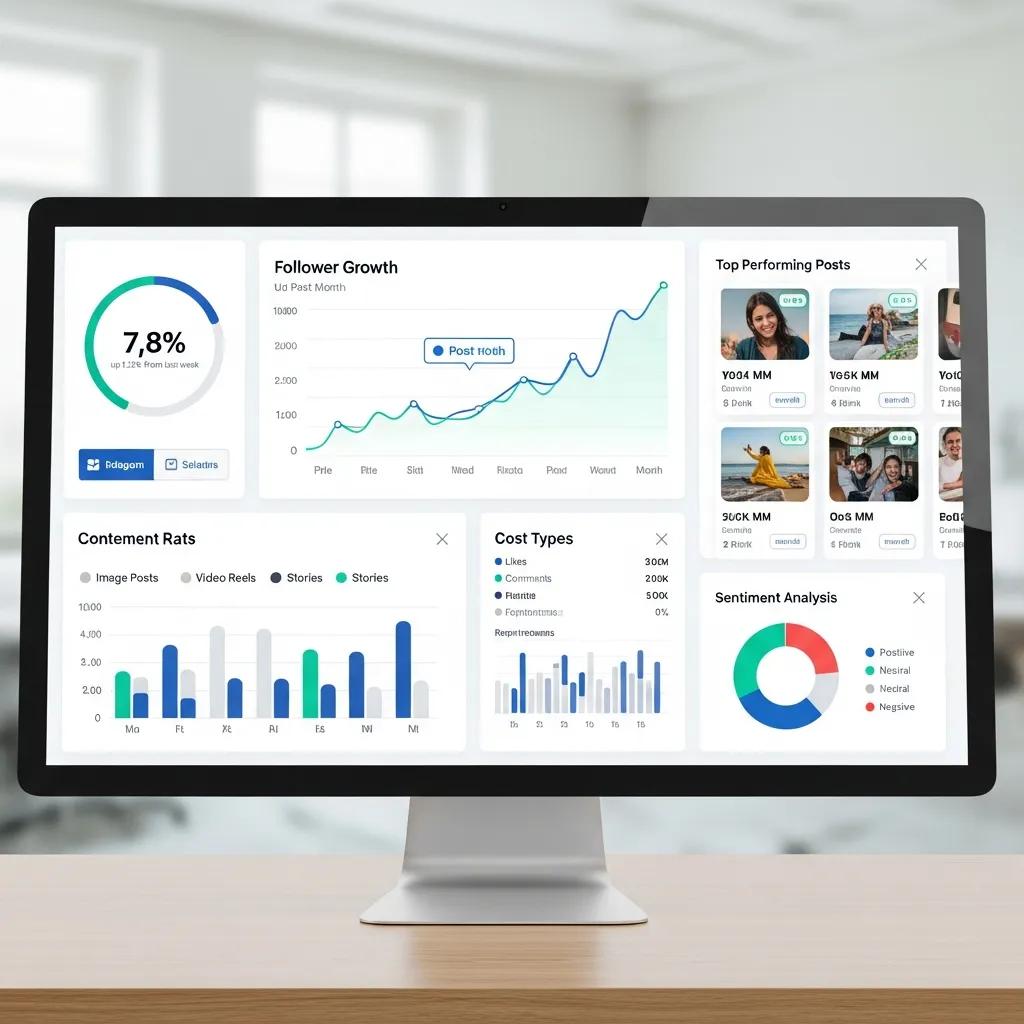
Social competitive analysis benchmarks engagement, formats, posting cadence, and messaging resonance to shape a content plan that supports lead generation. Compare quantitative metrics — engagement rate, reach, follower growth — alongside qualitative signals such as sentiment and comment themes to spot winning formats and amplification tactics. Use the checklist below to structure your review and detect weak spots in competitors’ social funnels.
- Select Benchmark Accounts : Pick direct competitors and aspirational profiles to compare against.
- Measure Engagement Rate : Normalize likes, comments, and shares per follower to make fair comparisons.
- Catalog Top Formats : Note whether videos, carousels, or long posts drive the most interactions.
- Track Posting Cadence : Find frequency patterns that align with engagement spikes.
- Map Content to Funnel Stage : Tag posts by awareness, consideration, and conversion intent.
Use this checklist to prioritize content experiments. The next sections explain benchmarking and choosing the right platforms and metrics.
How to Benchmark Audience Engagement and Content Performance?
Benchmarking requires consistent formulas and normalization so you can compare accounts of different sizes. Pair quantitative engagement rates with qualitative sentiment analysis to understand real resonance. Use this engagement-rate formula: (likes + comments + shares) ÷ followers × 100. Apply it across competitors, then normalize by post type to see which formats punch above their weight. Read comment topics to decide whether posts drive consideration or only surface-level reactions. Review cadence and reaction timing weekly or monthly, then run content pilots that test format and CTA variations.
Which Platforms and Metrics Should You Focus On for Social Media Analysis?
Platform choice depends on audience fit and conversion goals. B2B lead gen favors LinkedIn metrics like decision-maker engagement and content downloads, while local service businesses benefit from Facebook and Instagram reach that drives calls or bookings. Key metrics: Instagram — reach and saves; Facebook — impressions and click-throughs; LinkedIn — shares and comment depth. Use an audience-fit checklist: align demographics, buying intent, and content type to platform strengths so social feeds a measurable lead-generation funnel, not vanity metrics.
| Competitor Account | Engagement Attributes | Strategic Insight |
|---|---|---|
| Local HVAC Account | High posting frequency, low share rate | Test short how-to videos to boost shares |
| Regional Law Firm | Low frequency, high long-form engagement | Launch a regular explainer series to build trust |
| SaaS Startup | Fast follower growth, mixed sentiment | Refine messaging to address churn signals |
The table shows where to experiment: push shareable formats for service brands and amplify long-form expertise for firms that benefit from trust-building content. Next, we’ll cover paid search competitive dynamics.
How to Perform PPC Competitor Analysis to Optimize Paid Advertising Campaigns
PPC competitor analysis reverse-engineers competitors’ paid strategies: capture ad creative, top keywords, estimated CPCs, ad extensions, and landing-page experience to guide bidding and creative tests. Paid data reveal which offers and messages convert at scale and where auctions are dominated or under-served. Below is a capture checklist and how to use it for budget and creative optimization.
- Ad Creative and Copy : Catalog headlines, descriptions, and unique selling propositions.
- Keyword Overlap : Identify high-competition keywords and underserved long-tail opportunities.
- Estimated CPC and Budget Signals : Use CPC estimates to size bidding investments.
- Ad Extensions and Offers : Note which extensions (callouts, sitelinks) competitors use to expand SERP real estate.
- Landing Page Experience : Rate landing pages for relevance, speed, and CTA clarity.
Collecting these elements helps paid teams prioritize keywords with the best conversion potential and design landing pages that exploit competitor messaging gaps.
What Are the Key Elements of PPC Competitor Analysis?
Key elements include creative angle, keyword match types and negatives, audience targeting, ad scheduling, and post-click congruence between ad copy and landing pages. Use a capture checklist to record headline variants, value props, visible offers (discounts or free consults), CTA clarity, and mobile-first design quality. Apply a simple scoring rubric — Relevance, Credibility, Urgency — to rank competitor ads and choose which creatives to A/B test first. This turns guesswork into structured experiments.
| Competitor Campaign | Paid Attributes | Actionable Takeaway |
|---|---|---|
| Campaign A | High CPC, prominent offer headline | Test a differentiated offer vs. price-match messaging |
| Campaign B | Broad-match keywords, weak landing UX | Tighten match types and improve landing relevance |
| Campaign C | Retargeting-heavy, frequent dayparting | Use dayparting to lower CPC during off-peak hours |
How Can Competitor Bidding Strategies Improve Your PPC Performance?
Competitor bidding data tell you when to match bids for defensive terms and when to differentiate through audience layering or dayparting to avoid costly auction wars. Tactics: bid shading on high-competition keywords, layering remarketing audiences over search bids, and concentrating spend when auction prices dip. Run small tests that compare matched-bid tactics with audience-segmentation approaches; measure conversion rate and CPA before scaling. These experiments help optimize spend without needlessly escalating costs.
How Does Content Marketing Competitive Analysis Reveal Gaps and Opportunities?
Content competitive analysis audits competitor formats, topical depth, and distribution to prioritize themes that drive engagement and conversions. The framework maps top-performing topics, evaluates format effectiveness (blog, video, guide), and aligns content to funnel stages so teams create pieces that attract and convert. A prioritized topic matrix helps decide between pillar pages, long-form guides, or short viral formats based on competitor activity and audience intent.
What Content Formats and Distribution Channels Should You Analyze?
Analyze blogs, videos, long-form guides, infographics, and case studies, and check distribution channels like organic search, social, and email. Map formats to funnel stages — videos and infographics for awareness, long-form guides and case studies for consideration, and targeted landing pages for conversion — and score formats by reach, shareability, and conversion potential. Prioritize content that gives the best balance of effort versus expected conversion lift.
How to Identify Content Themes That Drive Engagement and Growth?
Find high-potential themes by combining keyword clustering with social resonance and on-site engagement metrics. Start with keyword clusters to establish intent, then cross-reference top social posts and comments to capture phrasing and pain points. Score themes by search volume, social resonance, and conversion relevance, then pilot the top themes with small campaigns to measure lift. Repeat the highest-performing plays to grow organic traffic and lead metrics reliably.
Which Tools and Resources Enhance Competitive Analysis in Digital Marketing?
Tools fall into categories — SEO crawlers, backlink explorers, social listening, PPC research, analytics and heatmaps, and AI augmentation — and each answers specific questions about visibility, authority, engagement, or conversion. Combine outputs from these categories to create a holistic analysis where keyword gaps, backlink prospects, and social sentiment feed a single prioritized plan. Below we summarize the main tool categories and how they fit into a data-agnostic methodology.
What Categories of Tools Support SEO, Social Media, and PPC Analysis?
Key categories: rank trackers and site crawlers for SEO, backlink explorers for link opportunities, social listening for resonance and sentiment, PPC intelligence for auction and creative insights, and analytics/heatmaps for post-click UX evaluation. Crawlers surface technical issues; backlink tools reveal authority paths; social listening highlights trending topics; PPC tools expose bidding patterns; heatmaps show conversion blockers. Align these outputs — keywords, referral sources, conversion paths — into testable hypotheses.
Below is a short note on how a tool-agnostic methodology turns data into recommendations.
- SEO crawlers : Reveal technical and indexability issues to fix first.
- Backlink explorers : Identify authoritative domains worth outreach.
- Social analytics : Show top content formats and ideal posting times.
In short: aggregating these outputs lets teams rank opportunities by traffic potential, conversion intent, and implementation effort.
How Does AI Improve the Efficiency and Accuracy of Competitive Analysis?
AI speeds up data aggregation, spots trends across large datasets, and helps score opportunities with predictive estimates of traffic and conversion potential. Practical AI workflows include automated keyword clustering, summarizing competitor themes, and ranking opportunities by expected lift. AI is a force multiplier, but it still needs human validation — models can miss local intent or messaging nuance. Combine AI-driven insights with manual checks and pilot tests to keep speed and strategic judgment in balance.
Best Fit Digital uses a tool-agnostic process with transparent reporting and performance-based accountability. Our boutique approach focuses on industries like HVAC, electrical, plumbing, law, and SaaS, delivering competitive analysis that converts into measurable lead-generation plans and campaign outcomes.
How to Perform PPC Competitor Analysis to Optimize Paid Advertising Campaigns
(Note: this heading revisits PPC analysis to make sure the guide is comprehensive. Below we summarize capture and bidding tactics with practical examples you can apply immediately.)
PPC competitor analysis synthesizes ad creative, keyword intent, bid signals, and landing-page experience into a prioritized test plan designed to lower CPA while maintaining scale. The process finds where competitors win with offers — and where they leave exploitable gaps, like neglected long-tail keywords or poor post-click UX. Use the capture checklist and bidding strategies below to run controlled tests without triggering costly bidding wars.
What Are the Key Elements of PPC Competitor Analysis?
Capture consistently: ad copy variants, visible offers, keyword lists (including negatives), audience segments, ad schedules, and landing-page metrics like load time and CTA prominence. Score each element against business goals: Visibility, Relevance, Conversion. This lets teams prioritize changes that most affect CPA — for example, simplifying forms or testing urgency-driven headlines inspired by competitor offers.
How Can Competitor Bidding Strategies Improve Your PPC Performance?
Use competitor bidding intelligence to decide when to protect brand terms and when to differentiate with audience targeting, ad extensions, or alternative offers. Tactics like bid shading, audience layering, and time-based bid adjustments avoid head-to-head auctions while capturing incremental volume. Run short tests comparing matched-bid approaches to segmented-audience strategies and scale the winner based on conversion rate and CPA.
| Competitor Campaign | Key PPC Attributes | Recommended Test |
|---|---|---|
| National Brand | High spend, generic offers | Test long-tail keywords + tailored offers |
| Regional Service | Targeted keywords, weak CTAs | Improve landing CTAs and reduce form fields |
| Niche SaaS | Retargeting-heavy, narrow funnel | Add educational content to the consideration stage |
Summary: These experiments — offer differentiation, landing-page fixes, or retargeting expansion — are likely to improve performance depending on competitor profile.
How Can Competitor Bidding Strategies Improve Your PPC Performance? (Duplicate H3 coverage)
Competitor bidding data helps you decide when to bid defensively on high-intent terms and when to pursue undervalued niche keywords for incremental conversions. Try time-of-day and device bid adjustments, adapt competitor ad angles for new value props, and layer audience lists to boost relevance without a big CPC increase. The goal is to find undervalued inventory where competitors overpay or under-optimize the post-click experience and capture that volume with controlled experiments.
If you’re ready to turn competitive analysis into a measurable plan, Best Fit Digital in Baltimore, MD offers tailored competitive analysis and lead-generation strategies with data-driven reporting and a performance-focused engagement model. Contact Clinton Jiggetts to request a consultation and get a clear, testable roadmap for traffic and lead improvements.
Frequently Asked Questions
What tools are essential for conducting competitive analysis in digital marketing?
Essential tools include SEO crawlers, backlink explorers, social listening platforms, PPC intelligence tools, and analytics software. Crawlers identify technical issues and keyword opportunities; backlink tools uncover outreach targets; social listening tracks sentiment and resonance; PPC tools reveal ad strategies; and analytics show post-click behavior. Together they provide a complete competitive view and help prioritize actionable work.
How often should businesses conduct competitive analysis?
Aim for a quarterly competitive review for most businesses; faster-moving industries may need monthly checks. Regular reviews help spot emerging opportunities, shifts in customer behavior, and new market entrants so you can adapt strategy before gaps widen.
What are the common mistakes to avoid in competitive analysis?
Common mistakes: focusing only on direct competitors, ignoring indirect rivals, letting data go stale, and relying solely on quantitative metrics. Also avoid analysis that isn’t tied to business goals. To avoid these pitfalls, take a holistic view, update data regularly, and convert findings into prioritized tests that map to revenue or lead goals.
How can competitive analysis improve content marketing strategies?
Competitive analysis reveals content gaps, high-performing topics, and successful formats. It shows which themes resonate and which distribution tactics work. Use these insights to create more relevant content, choose formats that convert, and plan promotion so your content reaches the right audience at the right time.
What role does social media play in competitive analysis?
Social media provides direct insight into audience engagement, content performance, and brand sentiment. Monitoring competitors’ social activity uncovers successful formats, posting frequency, and audience reactions — all of which inform your own social strategy and content experiments.
How can businesses leverage insights from competitive analysis for PPC campaigns?
Use competitive insights to find high-performing keywords, learn from competitors’ ad creatives, and refine bidding strategies. Understanding competitor offers and bidding patterns helps you avoid costly auctions and design ads and landing pages that convert better, improving ROI and lowering acquisition costs.
Conclusion
A thorough competitive analysis gives you the directional clarity to make smarter marketing choices and generate more leads. By systematically evaluating competitors’ strengths and weaknesses, you can optimize targeting, spend, and messaging to capture more qualified traffic. Start with a focused set of hypotheses, run small tests, measure results, and scale what works. Implement these practices and you’ll see clearer, faster marketing outcomes.