Baltimore Web Design Pricing & Timelines: Complete 2026 Cost Guide for Small to Medium Businesses
By Clinton Jiggetts, Best Fit Digital
As businesses navigate the digital landscape, understanding "web design pricing" and timelines becomes crucial for effective planning and budgeting. This guide offers a comprehensive overview of the expected costs and timelines specifically for Baltimore's small to medium enterprises in 2026. Readers will gain insights into various pricing models, typical expenses, and essential timelines associated with web development, empowering them to make informed decisions that align with their business objectives. The pain point for many business owners is the uncertainty around costs, leading to potential overspending or delayed projects. Herein, we address these concerns while paving the way for strategic planning. Key sections include various pricing structures, typical costs encountered, expected timelines for completion, and further considerations to keep in mind when budgeting for web design.
Pricing Structures
In the web design industry, businesses can select from several pricing structures that cater to different needs and budgets. Understanding these models aids in choosing the right service for your requirements. The predominant pricing structures include performance-based pricing, flat-rate pricing, and hourly rates, each offering its own set of advantages and suitability based on project type.
- Performance-Based Pricing: This model ties costs to the success of the web design project, incentivizing agencies to deliver results effectively.
- Flat Rate Pricing: In this approach, a set fee is paid for a defined scope of work, providing clarity and predictability in budgeting.
- Hourly Rates: This model charges based on the time spent on the project, suitable for smaller adjustments or ongoing services where project scope may vary.
Academic research highlights the importance of strategic pricing models in fostering successful long-term partnerships between IT service providers and their clients.
Value-Based Pricing Strategies for SME Web Development The goal of this research is to study the two managerially and academically important issues of 1) the level of value based pricing used in SMEs and 2) pricing strategy as a tool for partnerships. Pricing strategy and revenue models: A multiple case study from the IT service sector in Finland, 2013
Understanding these pricing structures is vital in aligning service expectations with budget constraints when planning a web design project.
Typical Costs
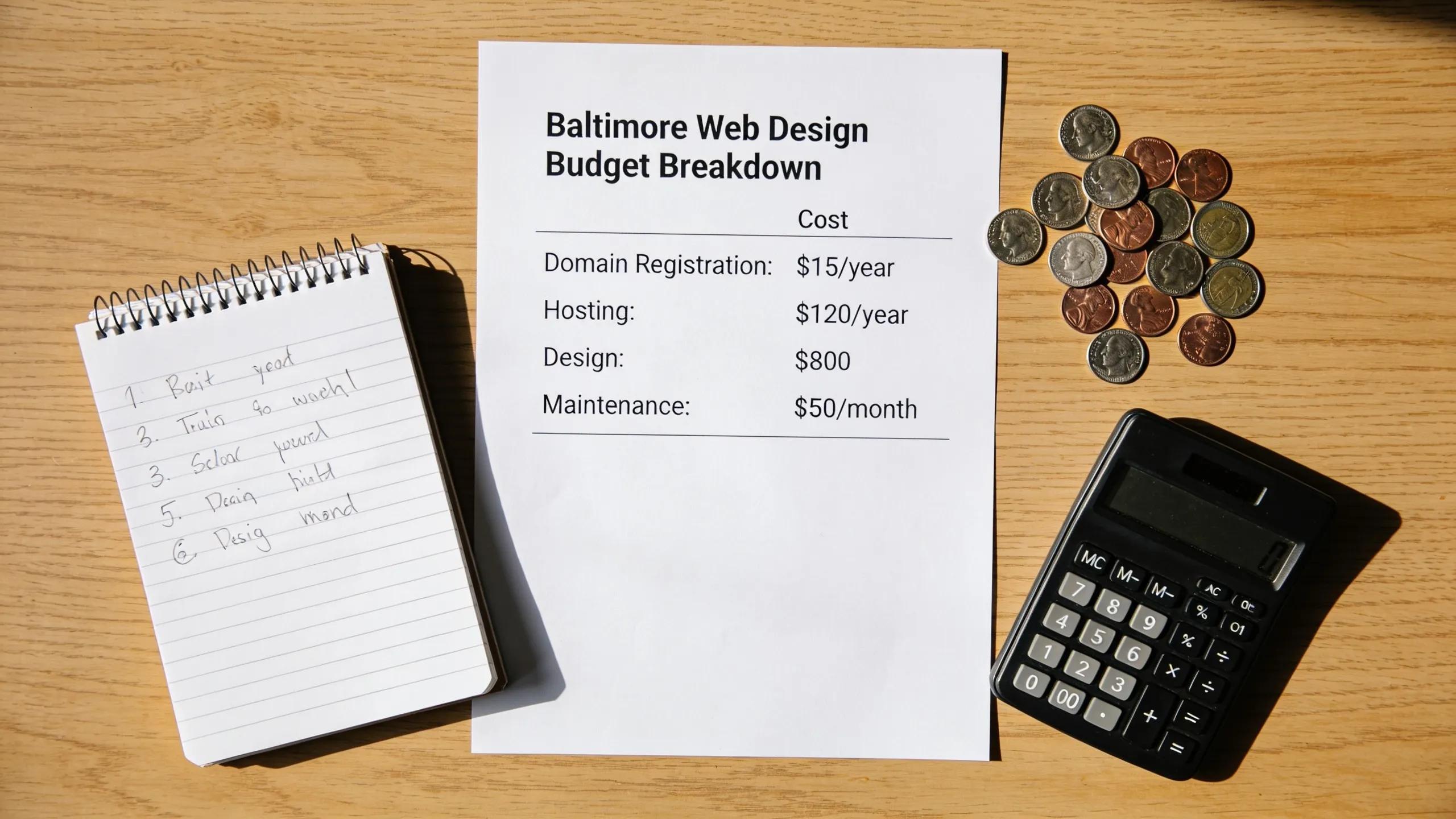
To offer an accurate overview, we break down average web design costs specific to the Baltimore area, reflecting the unique market dynamics of 2026. Various cost factors should be considered, including basic design expenses, additional features, and complexity levels.
| Design Complexity | Base Cost Estimate | Additional Features Cost |
|---|---|---|
| Basic Design | $2,000 - $5,000 | $500 - $1,500 |
| Intermediate | $5,000 - $10,000 | $1,500 - $3,000 |
| Advanced | $10,000 - $20,000 | $3,000 - $5,000 |
Investing in web design represents one of the most significant financial commitments for small to medium businesses, thus precise budgeting becomes essential. For further guidance on specific user value and consultation, "Best Fit Digital" specializes in providing tailored services that align closely with client expectations and the latest market trends.
Expected Timelines

Understanding the expected timelines for various phases of web design projects is equally crucial for effective planning and management. Project timelines can vary considerably based on complexity and specific business needs, typically spanning from a few weeks to several months.
- Discovery Phase: 1-2 weeks for requirements gathering and project scope definition.
- Design Phase: 2-4 weeks for the development of design mocks and revisions.
- Development Phase: 4-12 weeks can vary based on the complexity of features and integration.
- Testing and Launch Phase: 1-2 weeks for quality checks, revisions, and final launch preparations.
Project managers can better estimate their available financing and project duration by utilizing structured evaluation methods for web resource development.
Estimating Web Design Costs and Project Timelines The software solution may be of use for both IT project managers and customers looking to build a web resource who will be able to gain an understanding of the cost of a web resource set-up and to estimate their available financing for such undertaking. Automation of Cost Evaluation Methods When Choosing a Commercial Web Resource Through the Example of Primorsky Krai, 2020
Recognizing the importance of realistic expectations during these phases allows businesses to align internal resources effectively.
Key Considerations for Budgeting
When budgeting for web design projects, several pivotal factors must be considered to ensure that financial resources are allocated wisely. Essential considerations include the level of customization required, the costs associated with content creation, and ongoing maintenance needs.
- Customization Level: Complex and highly customized projects typically demand a higher budget due to additional design and development work.
- Content Creation Costs: Depending on whether in-house creation is feasible or outsourced, costs can differ significantly.
- Ongoing Maintenance Considerations: Many businesses overlook the necessity of regular site maintenance, which can incur additional recurring expenses.
Engaging with "Best Fit Digital" can help businesses tailor their requirements effectively, ensuring that all elements of a project are factored into budgeting.